

Can mobile container rooms be used in hot climates?
Nov 27, 2025
Leave a message
Hey there! As a supplier of Mobile Container Rooms, I often get asked if these nifty little spaces can hold up in hot climates. Well, let's dive right into it and find out.
First off, what are Mobile Container Rooms anyway? They're basically pre - fabricated, transportable living or working spaces. They come in different types, like Folding Container Rooms, Mobile Container Rooms, and Expandable Container Rooms. These rooms are super versatile and can be used for all sorts of things, from temporary housing during construction projects to pop - up shops at festivals.
Now, let's talk about hot climates. When we say hot, we're usually talking about places where the temperatures soar above 30°C (86°F) for extended periods, and sometimes even hit 40°C (104°F) or higher. In these conditions, a regular container can turn into an oven pretty quickly. But here's the good news: Mobile Container Rooms are designed to handle heat a whole lot better.
One of the key features that make Mobile Container Rooms suitable for hot climates is insulation. Most of the modern ones come with high - quality insulation materials. These materials act as a barrier between the inside of the room and the scorching outside heat. They slow down the transfer of heat, keeping the interior cooler. For example, some rooms use foam insulation, which is lightweight and has excellent thermal resistance. This means that even when it's boiling hot outside, the temperature inside the room can stay relatively comfortable.
Another important factor is ventilation. Good ventilation is crucial in hot climates. Mobile Container Rooms are often equipped with well - designed ventilation systems. These can include windows that can be opened wide, exhaust fans, and even air vents. The windows allow fresh air to come in, while the exhaust fans help to push out the hot, stale air. This constant flow of air helps to maintain a pleasant indoor environment. Some advanced models even have automated ventilation systems that adjust based on the temperature and humidity levels inside the room.
The choice of exterior materials also plays a big role. Many Mobile Container Rooms are made with materials that reflect sunlight rather than absorb it. For instance, some use special paints or coatings on the outside that have high solar reflectance. These materials bounce a large portion of the sun's rays back into the atmosphere, reducing the amount of heat that gets absorbed by the container. This not only keeps the room cooler but also helps to extend the lifespan of the container by preventing excessive heat - related damage.
But it's not just about the physical design. Mobile Container Rooms can also be paired with air - conditioning systems. These can be either split - system air conditioners or portable ones, depending on the size and requirements of the room. An air - conditioner can quickly bring down the temperature inside the room to a comfortable level. And since Mobile Container Rooms are relatively small and well - insulated, they don't require as much energy to cool as a large, traditional building.
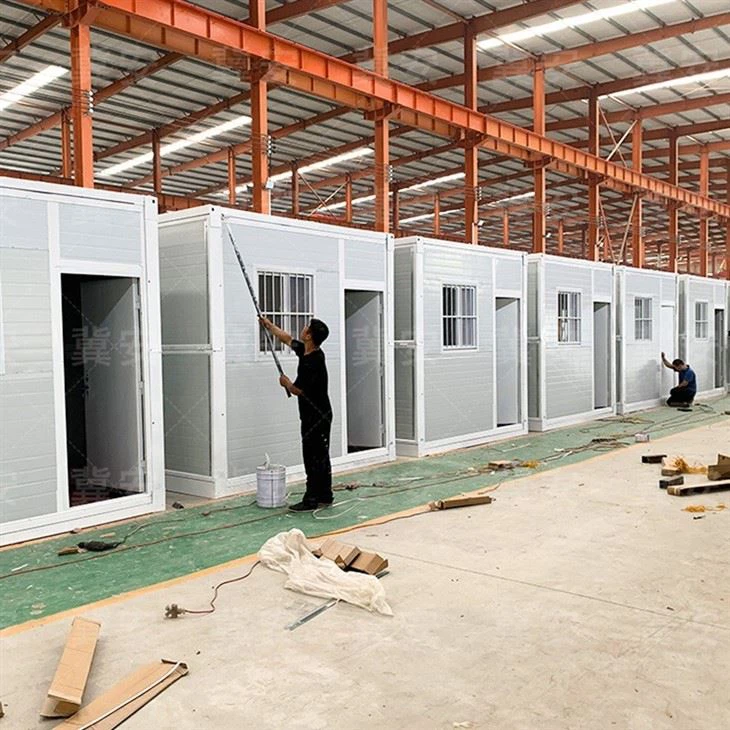

Let's take a look at some real - world examples. In the deserts of the Middle East, where temperatures can reach extreme highs, Mobile Container Rooms are being used for various purposes. Construction companies use them as on - site offices and accommodation for workers. These rooms are able to provide a cool and comfortable space for people to work and rest, despite the harsh desert conditions. Similarly, in some parts of Australia, where summers can be blisteringly hot, farmers are using Mobile Container Rooms as storage spaces for equipment and even as small workshops. The insulation and ventilation features ensure that the equipment inside doesn't get damaged by the heat.
Of course, like any other product, there are some considerations when using Mobile Container Rooms in hot climates. Maintenance is important. The insulation, ventilation systems, and air - conditioners need to be regularly checked and serviced. Over time, the insulation can degrade, and the ventilation systems can get clogged with dust. Regular maintenance ensures that these components are working at their best and that the room continues to perform well in the heat.
The size of the room also matters. A smaller Mobile Container Room will generally be easier to cool than a larger one. If you're planning to use the room in a hot climate, it's a good idea to choose a size that suits your needs without being overly large. This way, you can keep the energy consumption for cooling down.
Cost is another factor. While Mobile Container Rooms are generally more affordable than traditional buildings, adding insulation, ventilation, and air - conditioning can increase the initial cost. However, when you consider the long - term savings in terms of energy efficiency and the fact that these rooms can be reused and relocated, the overall cost - effectiveness is quite high.
In addition to the practical aspects, Mobile Container Rooms also offer some environmental benefits in hot climates. Since they are more energy - efficient, they consume less electricity for cooling. This means a lower carbon footprint compared to traditional buildings. With the growing concern for the environment, this is an important advantage.
So, to sum it up, Mobile Container Rooms can definitely be used in hot climates. Their insulation, ventilation, choice of materials, and the ability to pair with air - conditioning systems make them a great option. Whether you need a temporary workspace, a storage area, or a place to live, these rooms can provide a comfortable and functional solution even in the hottest of places.
If you're interested in purchasing a Mobile Container Room for a hot - climate location, don't hesitate to get in touch. We have a wide range of options to suit different needs and budgets. Whether you're looking for a Folding Container Room, a Mobile Container Room, or an Expandable Container Room, we've got you covered. Let's have a chat and see how we can help you find the perfect solution for your requirements.
References:
- Building Science Corporation. "Thermal Insulation Basics."
- ASHRAE (American Society of Heating, Refrigerating and Air - Conditioning Engineers). "Handbook of Fundamentals."