

Are mobile container rooms earthquake - resistant?
Jan 19, 2026
Leave a message
Hey there! I'm a supplier of Mobile Container Rooms, and I get asked a ton of questions about these nifty structures. One question that pops up more often than you'd think is, "Are mobile container rooms earthquake-resistant?" Well, let's dive right into it and find out.
Understanding Earthquake Resistance
First off, we need to understand what makes a building earthquake-resistant. Earthquakes generate seismic waves that shake the ground, and a structure needs to be able to withstand these forces without collapsing. There are a few key factors that contribute to earthquake resistance:
- Flexibility: A building should be able to bend and sway with the seismic waves rather than being rigid. This helps to dissipate the energy and prevent the structure from breaking.
- Strength: The materials used in the construction of the building need to be strong enough to withstand the forces exerted during an earthquake.
- Foundation: A solid foundation is crucial for earthquake resistance. It needs to be able to anchor the building to the ground and distribute the seismic forces evenly.
Mobile Container Rooms: The Basics
Mobile container rooms are made from shipping containers, which are typically made of steel. Steel is a strong and durable material that has good flexibility, making it a great choice for earthquake-prone areas. These rooms are also modular, which means they can be easily assembled and disassembled, making them a popular choice for temporary or permanent housing, offices, and other applications.
There are different types of mobile container rooms available, such as Modular Container Rooms, Flat Pack Container Rooms, and Expandable Container Rooms. Each type has its own unique features and benefits, but they all share the basic characteristics of being made from steel and being modular.
Earthquake Resistance of Mobile Container Rooms
So, are mobile container rooms earthquake-resistant? The short answer is yes, they can be. However, it depends on several factors, including the design, construction, and installation of the container room.
Design
The design of the container room plays a crucial role in its earthquake resistance. A well-designed container room will have a strong and stable frame that is able to withstand the forces exerted during an earthquake. The frame should be made of high-quality steel and should be properly welded or bolted together to ensure maximum strength.
In addition to the frame, the design of the container room should also take into account the distribution of weight and the center of gravity. A container room that is top-heavy or has an uneven weight distribution is more likely to tip over during an earthquake. Therefore, it's important to ensure that the container room is designed to be as stable as possible.
Construction
The construction of the container room also affects its earthquake resistance. During the construction process, it's important to use high-quality materials and to follow proper construction techniques. The steel used in the construction of the container room should be of the appropriate grade and thickness, and it should be properly treated to prevent corrosion.
The welding or bolting of the steel components should also be done correctly to ensure maximum strength. Any joints or connections in the container room should be reinforced to prevent them from failing during an earthquake.
Installation
The installation of the container room is another important factor in its earthquake resistance. The container room should be installed on a solid and level foundation that is able to support its weight and the forces exerted during an earthquake. The foundation should be properly designed and constructed to ensure that it is able to distribute the seismic forces evenly.
In addition to the foundation, the container room should also be properly anchored to the ground. This can be done using bolts, cables, or other types of anchoring systems. The anchoring system should be designed to withstand the forces exerted during an earthquake and to prevent the container room from sliding or tipping over.
Case Studies
There have been several case studies that demonstrate the earthquake resistance of mobile container rooms. For example, in 2011, a magnitude 9.0 earthquake struck off the coast of Japan, causing widespread damage and destruction. Despite the severity of the earthquake, many container homes and buildings in the affected areas remained standing.
One such container home was a modular house in the city of Sendai. The house was designed and constructed by a local architect using shipping containers. The house was built on a steel frame and was anchored to a concrete foundation. Despite being located just a few kilometers from the epicenter of the earthquake, the house remained standing and was undamaged.
Another case study is from New Zealand. In 2016, a magnitude 7.8 earthquake struck the South Island of New Zealand. Many container homes and buildings in the affected areas were able to withstand the earthquake and remained standing. One container home in the town of Kaikoura was designed and built by a local builder using shipping containers. The house was built on a steel frame and was anchored to a concrete foundation. Despite being located in a high-risk earthquake zone, the house remained standing and was undamaged.
Conclusion
In conclusion, mobile container rooms can be earthquake-resistant if they are designed, constructed, and installed properly. The steel used in the construction of the container room provides strength and flexibility, which are important for earthquake resistance. However, it's important to ensure that the container room is designed to be as stable as possible, that high-quality materials are used, and that the installation is done correctly.

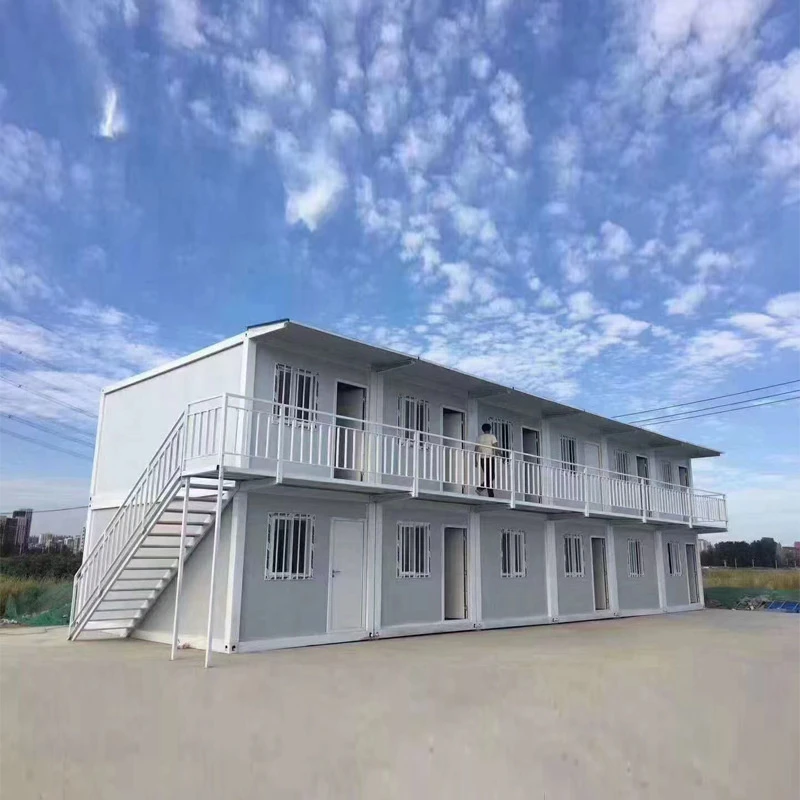
If you're considering purchasing a mobile container room for an earthquake-prone area, it's important to do your research and choose a reputable supplier. A good supplier will be able to provide you with information about the earthquake resistance of their container rooms and will be able to help you choose the right design and construction options for your needs.
If you have any questions about our mobile container rooms or would like to discuss your specific requirements, please don't hesitate to get in touch. We're here to help you find the perfect solution for your needs.
References
- American Society of Civil Engineers. (2018). Minimum Design Loads and Associated Criteria for Buildings and Other Structures.
- Federal Emergency Management Agency. (2015). Design and Construction Guidance for Community Safe Rooms.
- International Building Code. (2018). International Code Council.