

What is the thermal conductivity of mobile container rooms?
Jun 09, 2025
Leave a message
Hey there! As a supplier of Mobile Container Rooms, I often get asked about the thermal conductivity of these nifty little structures. So, I thought I'd take a deep dive into this topic and share everything I know with you.
First off, let's break down what thermal conductivity actually means. In simple terms, thermal conductivity is a measure of how well a material conducts heat. If a material has high thermal conductivity, it means heat can pass through it easily. On the other hand, a material with low thermal conductivity is a good insulator, which means it resists the flow of heat.
When it comes to mobile container rooms, thermal conductivity plays a crucial role. Think about it - if your container room has high thermal conductivity, it'll be like living in an oven in the summer and a freezer in the winter. You'll end up spending a fortune on heating and cooling to keep the temperature comfortable. That's why it's super important to understand the thermal conductivity of the materials used in these rooms.
Most mobile container rooms are made from steel, which is a relatively good conductor of heat. Steel has a thermal conductivity of around 45 - 50 W/(m·K). This means that heat can transfer through the steel walls of the container quite quickly. But don't worry, there are ways to mitigate this.
One of the most common ways to improve the thermal performance of a mobile container room is by adding insulation. Insulation materials have low thermal conductivity, which helps to slow down the transfer of heat. There are several types of insulation that can be used in container rooms, such as fiberglass, foam board, and spray foam.
Fiberglass insulation is a popular choice because it's relatively inexpensive and easy to install. It has a thermal conductivity of around 0.03 - 0.04 W/(m·K), which is much lower than that of steel. Foam board insulation, on the other hand, is more rigid and has a slightly lower thermal conductivity, usually around 0.02 - 0.03 W/(m·K). Spray foam insulation is the most effective option, with a thermal conductivity as low as 0.01 - 0.02 W/(m·K). It also has the added benefit of sealing air leaks, which can further improve energy efficiency.
Another factor that affects the thermal conductivity of a mobile container room is the design. For example, double - walled container rooms can provide better insulation than single - walled ones. The air gap between the two walls acts as an additional layer of insulation, reducing heat transfer.
Now, let's talk about the different types of mobile container rooms we offer. We have Flat Pack Container Rooms, which are easy to transport and assemble. These rooms can be customized with the insulation of your choice to meet your specific thermal requirements.
Our Prefab Container Rooms are pre - fabricated in our factory, which means they're built to high standards of quality and insulation. We use the latest insulation materials to ensure that these rooms are energy - efficient.
And then there are our Folding Container Rooms. These are great for temporary or portable applications. Despite their portability, we still pay close attention to their thermal performance, using insulation to keep the interior temperature stable.

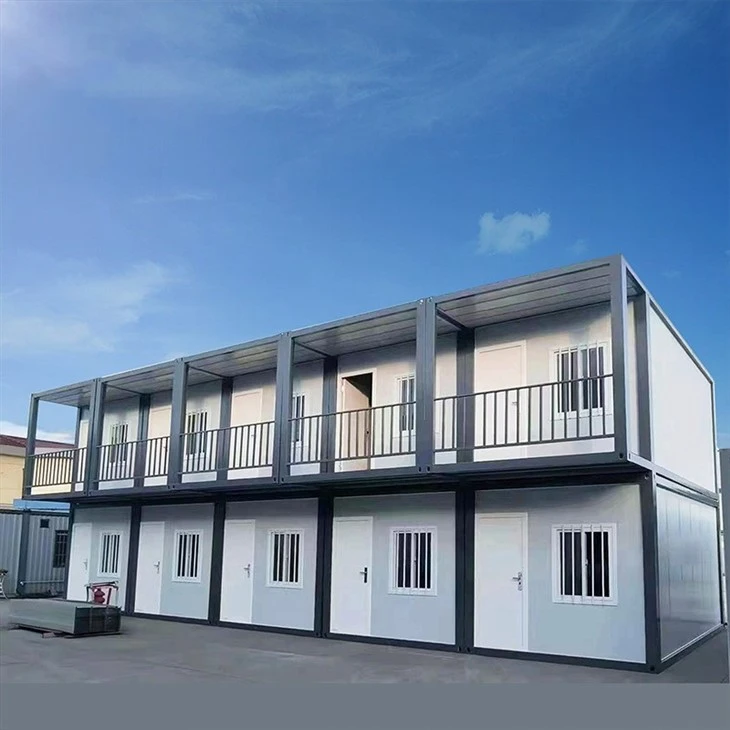
When you're considering purchasing a mobile container room, it's important to look at the overall thermal performance. You can ask for the R - value of the insulation, which is a measure of its resistance to heat flow. The higher the R - value, the better the insulation.
It's also a good idea to consider the climate where the container room will be located. If you're in a hot climate, you'll want a room with excellent insulation to keep the heat out. In a cold climate, you'll need insulation to keep the warmth in.
We understand that every customer has different needs when it comes to thermal conductivity and energy efficiency. That's why we offer a range of options to customize your mobile container room. Whether you're looking for a basic room for storage or a fully - equipped living space, we can help you find the right solution.
If you're interested in learning more about our mobile container rooms or have questions about thermal conductivity, don't hesitate to reach out. We're here to help you make an informed decision and find the perfect container room for your needs. Contact us today to start the conversation and let's work together to create a comfortable and energy - efficient space for you.
References
- "Thermal Properties of Building Materials" by John Wiley & Sons
- "Insulation Handbook" by the Insulation Manufacturers Association